How to · 20 minutes
How to adjust a garage door
Two adjustments on the opener head are yours: how far the door travels, and how much force it uses. Both are small dials or buttons, both move in quarter turns, and both should be set to the least that works. The spring tension is a third adjustment and it is not yours.
Read this first
Never wind the force up to make a binding door close. The force setting is a safety limit, not a power setting — turning it up so a door beats an obstruction is how panels get bent and people get hurt.
What you need
- A flathead screwdriver
- A stepladder
4 steps
Doing it
- Travel down: if the door stops short, turn the down-travel dial a quarter turn toward more. If it lands then reopens, turn it back.
- Travel up: set so the door stops just short of the opener rail bracket, not against it.
- Force: set to the minimum that closes reliably, then test the safety reverse.
- Test the reverse with a two-by-four flat on the floor under the door.It must touch and reverse. If it does not, the force is too high and the door is now dangerous.
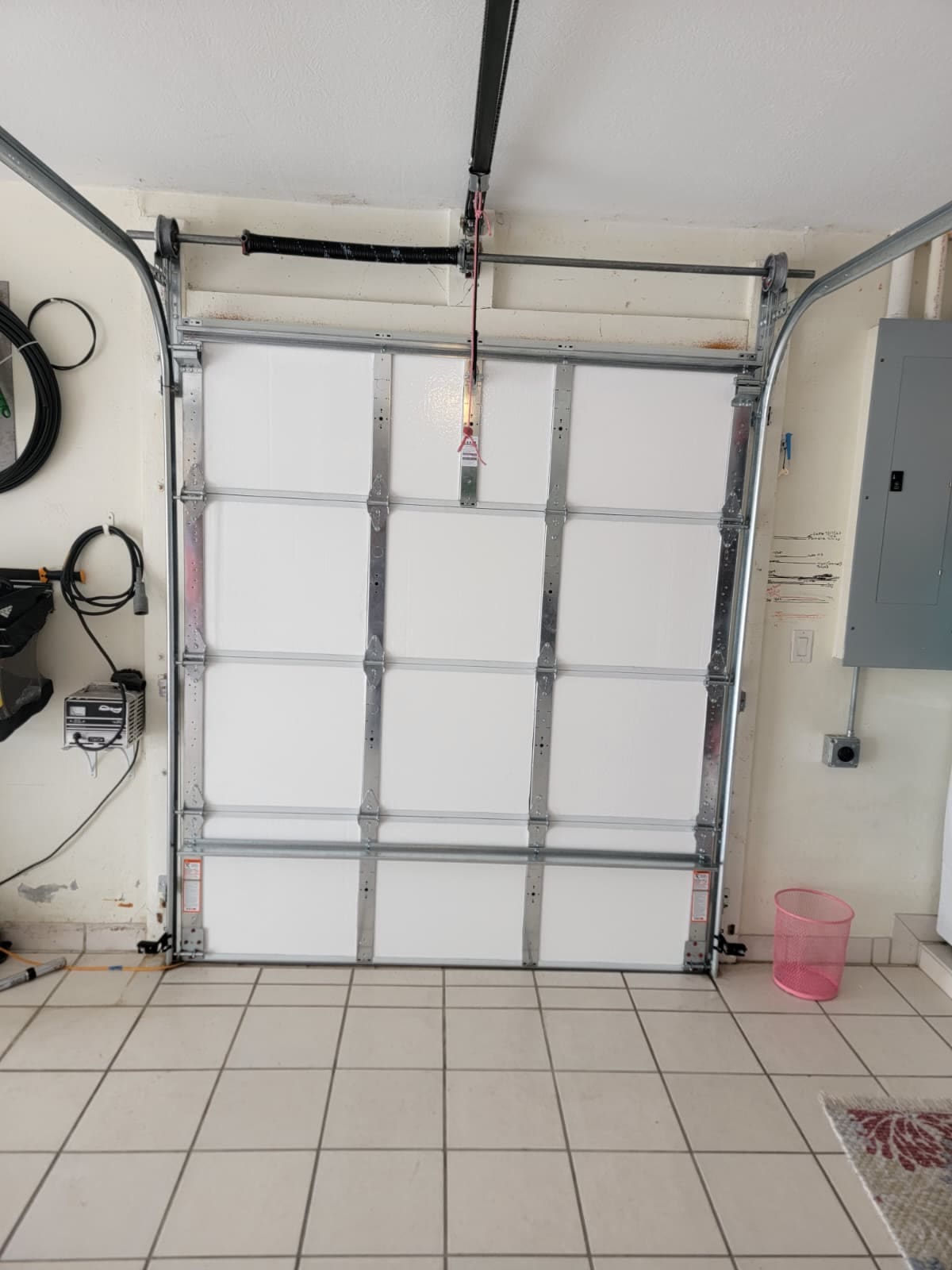
Where it stops being yours
If the door is heavy by hand, sits crooked, or will not stay put when you stop it halfway, no opener adjustment fixes that. The springs are wrong and that is a service call.
More how-to
Also asked
When it does not go to plan
Which adjustment am I allowed to touch?
The opener's travel limits and force settings, which are dials or buttons on the motor unit and are meant to be set. What you should not touch is the spring tension — that is set with two steel bars against a wound spring, and it is the one job on a garage door that seriously hurts people.
How do I know the door is balanced?
Disconnect the opener with the release cord, lift the door halfway by hand and let go. A balanced door stays where you put it. If it drops or rises, the spring tension is wrong — and that is a call, not an adjustment.
The door reverses just before it shuts.
Either the down limit is set too far, so the door hits the floor and reads it as an obstruction, or the close force is too low. Adjust the limit first and the force second, and test the safety reverse against a solid object afterwards every time.