How to · 15 minutes
How to measure for a garage door
Five numbers, and four of them are the ones people forget. The opening width and height are the door size. Then headroom above the opening, sideroom either side, and backroom into the garage — those decide whether a standard track will fit at all.
What you need
- A tape measure
- Somebody to hold the other end
9 steps
Doing it
- Width: across the finished opening at its narrowest point.The door is made to this. Measure in three places and take the smallest.
- Height: floor to the top of the finished opening.
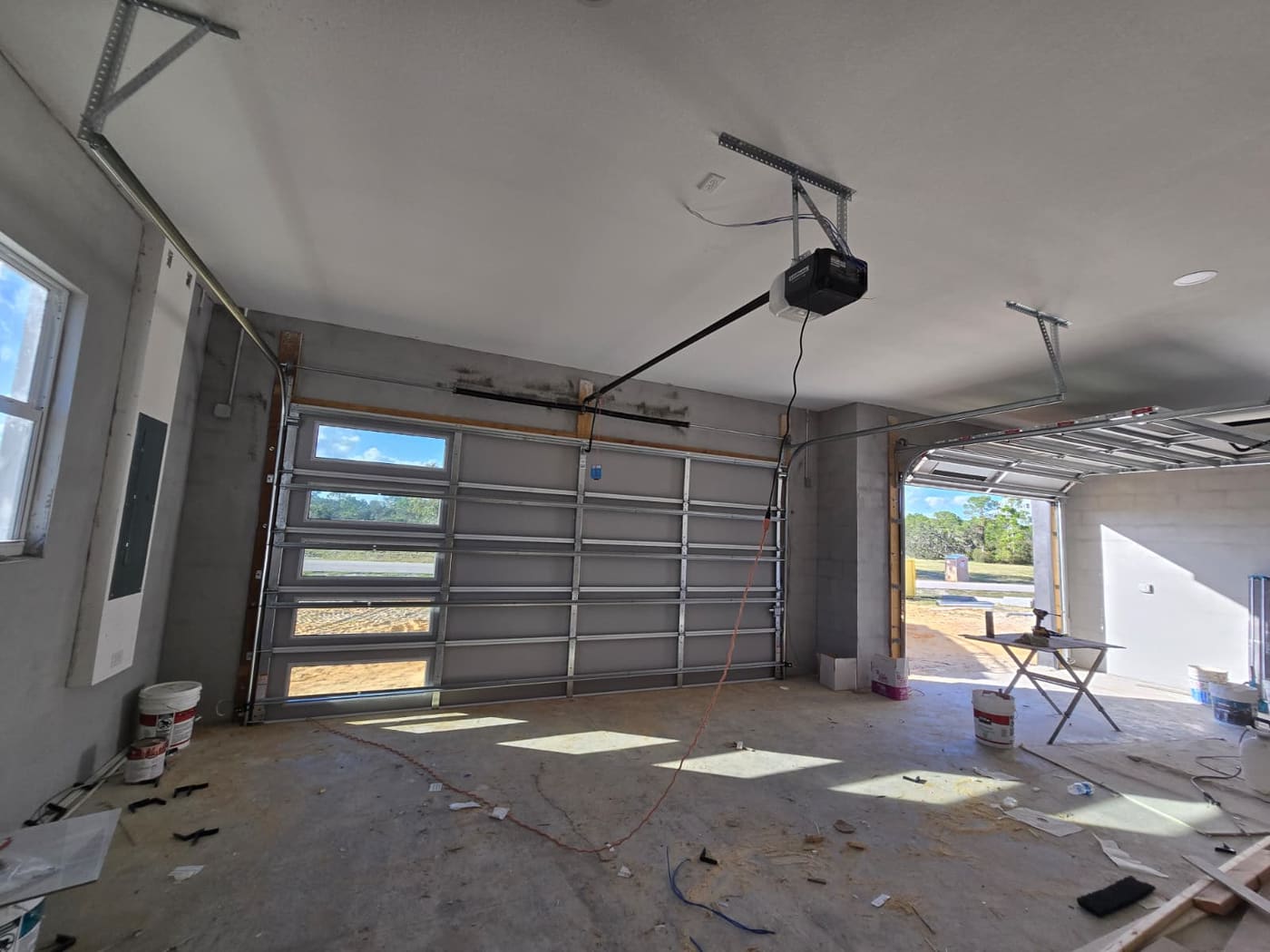
- Headroom: top of the opening to the ceiling or the nearest obstruction.Twelve inches for standard torsion. Less than that needs a low-headroom kit, which costs more.
- Sideroom: from each edge of the opening to the nearest wall.Three and three-quarter inches minimum each side for the vertical track.
- Backroom: how far into the garage you have, from the opening.Door height plus eighteen inches, and another two feet or so for a ceiling-mounted opener.
- Lay a level across the floor of the opening.A floor that falls away to one side leaves a gap under one end of a new door. A small slope is taken up by the bottom seal; a large one has to be planned for before the door is ordered.
- Push a screwdriver into the wood around the opening: both sides and the header.The track and the spring brackets bolt into that wood. Soft or rotten framing has to be replaced before a new door goes in, and it is cheaper to know now than on the day.
- Look along the ceiling where the tracks will run, with a torch.A light, a pipe, a storage rack or a beam in the wrong place is what stops an install. The tape says the space is there; the torch says whether it is clear.
- Write the size as width by height, in feet and inches: 16'0" x 7'0".Doors are ordered in feet. A size written in inches only is how a 16x7 gets ordered as a 7x16 or a 15'8" gets rounded the wrong way.
Where it stops being yours
If any clearance is short of what the steps say, or the opening is not a standard size, have a fitter measure before you order. A door made to a size is usually not returnable.
More how-to
Also asked
When it does not go to plan
Do I measure the old door or the opening?
The opening, every time, and the finished opening rather than the framing. For a sectional door the rough opening equals the door size exactly — a 16x7 door needs a 16'0" by 7'0" hole. Measuring the old door leaf, the concrete apron or the gap between studs is how a door arrives that does not fit.
What else do I have to measure?
Three clearances, and all three stop a job on the day rather than at the quote. Headroom above the opening for the track to curve and the spring to sit. Sideroom each side for the vertical track. Backroom, for how far the door travels into the garage when it is open. Take all three with a tape and a torch, because a ceiling that looks clear often has a pipe or a light exactly where the track goes.
Do I measure before or after the old door comes out?
Before. You need the numbers to get a price and order the door, and the old door comes out on the day the new one goes in. Measure with the old door closed, then have the fitter check the opening again before the new one is hung.
Is my measurement enough, or does the installer measure too?
Yours gets the price close. A good installer still measures in person before ordering, because a made-to-size door that is an inch out cannot be fixed on the day. If a company orders from your numbers alone, ask who pays if they are wrong.
The opening is not square — now what?
Measure the width at the top, the middle and the bottom, and the height at both sides, and give the fitter the smallest of each. An old wall out by an inch is normal and is dealt with on the day; an old wall nobody measured properly is a door that will not seal at one end.